Cozy Chaos Days: Simple Family Activities for When You’re Low on Time (and Energy)
Some days with kids feel like a perfectly planned Pinterest board. Most days feel like… “What’s for dinner?” “Where’s your sock?” and “Why is there yogurt on the ceiling?” When you’re juggling work, house stuff, and endless laundry, planning “wholesome family activities” can feel like one more thing on an already full plate.
This isn’t that kind of guide.
This is for the evenings when you’re tired, the weekends with no budget for outings, and the days when everyone is a little cranky and a lot overstimulated. These are simple, low-prep, real-life family activities that fit into the cozy chaos you’re already living in—plus small mindset shifts to help you feel good about what you are doing, not guilty about what you’re not.
Redefining “Quality Time” (Hint: It’s Shorter and Messier Than You Think)
We’re sold this image of “quality time” as a long, perfectly planned family day with matching outfits and zero meltdowns. Real life is a 15‑minute game before bedtime, chatting in the car, or laughing during clean‑up time because someone put a sock on their head.
Short, consistent pockets of connection matter more than rare, big moments.
A five‑minute dance party in the kitchen counts. Reading one book at bedtime counts. Letting your kid “help” stir the pasta sauce absolutely counts. Research shows that loving, responsive interactions—even in small bursts—can boost kids’ emotional security and sense of belonging. And for you, it takes the pressure off: you don’t have to stage a perfect “family activity.” You only need to show up in the moment you’re already in.
Try this reframe on rough days: “What is one tiny way I can connect with my child in the next 10 minutes?” Not a whole day. Just the next 10 minutes.
Everyday Moments That Secretly Are Family Activities
You don’t have to create a special event for connection; you can quietly build it into what’s already happening. Here’s how everyday life can double as family time:
1. Cooking = A Mini Team Project
Real-life scenario: It’s 5:30 p.m., you’re tired, and everyone is whining. Instead of “Go play while I cook,” try inviting them into the process.
- Toddlers can wash veggies in a bowl of water or sprinkle cheese.
- Preschoolers can stir, pour pre-measured ingredients, or set napkins.
- Older kids can read the recipe, measure ingredients, or be in charge of one part of the meal.
It will be slower and messier. That’s okay. Narrate what you’re doing (“I’m cutting carrots so they cook faster,” “We’re adding salt for flavor”) so it becomes a little built‑in learning moment and a shared routine. Over time, your child starts to connect dinnertime with working together, not just “Mom/Dad in the kitchen alone.”
2. Chores = Team Challenges (Not Punishments)
Instead of seeing chores as something that takes you away from family time, try turning them into low-key games everyone can join:
- “Laundry basketball” – who can toss socks into the basket?
- “Toy rescue mission” – save all the toys from the “lava” (the hallway) and get them back into their “home” bins.
- “Beat the timer” – set a 5‑minute timer and see what you can all clean up together.
Even if it’s not perfectly done, you’re getting some help, modeling responsibility, and sneaking in teamwork. And you’re not stuck choosing between “clean house” or “time with kids”—you’re blending them.
3. Car Rides = Connection on Wheels
If your afternoons are a blur of pick‑ups and drop‑offs, use that car time:
- Try a daily question: “What was the funniest thing that happened today?” or “What’s one thing you’re proud of from today?”
- Choose a “family song of the week” and sing it every car ride.
- For younger kids, play “I spy” or “Can you find three red things outside?”
These rituals can turn otherwise stressful driving into something everyone quietly looks forward to—even if it’s just for a few minutes.
Simple, Low-Energy Activities for Tired Parents
On the days when your brain feels like mush and you can’t imagine one more decision, you need activities that require minimal prep, minimal clean‑up, and basically no creativity.
Here are some “I’m exhausted but still want to connect” ideas:
The Blanket Fort Pause
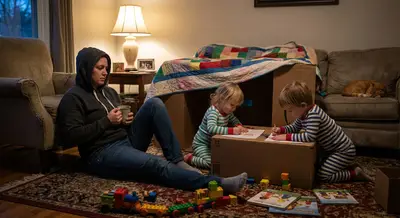
Grab a sheet, some chairs, a few pillows, and dim the lights. Crawl in together with flashlights, stuffed animals, or a snack. You don’t need a script—just lay there, tell a silly story, or let your child lead the play. If you’re really tired, you can even say, “I’m going to lie down and rest while you make up a story for me.”
The “Reverse Teacher” Game
Let your child be the teacher and you be the student. They can “teach” you:
- How to build with their blocks
- The rules to their favorite game
- The names of their stuffed animals
- A dance they made up
Kids love having the power and attention. You get to follow, not lead, which takes mental load off your plate—and they build confidence by being the expert.
The Two‑Toy Story
Pick any two objects in the house (a spoon and a toy car, a sock and a book) and invite your child to help make up a story about them. You can start: “Once upon a time, there was a spoon who really wanted to be a race car…” Let the story get silly. You’re building imagination and language skills without any prep or props.
The “One Song” Dance Break
You don’t need a full dance party—just one song. Pick a family anthem, put it on, and everyone dances or jumps on the spot until the song ends. That’s it. Two to four minutes of movement can shift the mood for everyone (and still fits between homework and bedtime).
Rainy Days, Sick Days, and “We’re All Stuck Inside” Days
Some days you’re home not because you want to be—but because everyone has a cold, the weather is miserable, or you just don’t have the capacity to go anywhere. Those days can drag, especially when kids are restless and you’re drained.
Here are a few activities that work for “low battery” families:
1. The “Yes Space” Play Zone
Gather some safe toys, pillows, books, and maybe a couple of kitchen items (like a pot and wooden spoon) in one area of the house. Tell your child, “This is your ‘yes’ space—everything here is for you to play with.” Then you sit nearby with your coffee, phone, or book.
Your active role: lightly comment and occasionally join (“That tower is getting so tall!” “Wow, your car is going super fast”). You’re present and engaged, but you’re not expected to entertain constantly.
2. Photo Album Time
Pull up old photos on your phone or a printed album and scroll together:
- “This was you when you were a baby.”
- “This is Grandma’s house.”
- “Here we were at the park.”
Ask simple questions: “Do you remember this?” “How old do you think you were here?” It’s surprisingly calming for kids and can spark sweet conversations about family, growing up, and memories.
3. Indoor “Adventure Walk”
Instead of a walk around the block, make one in your home:
- “Let’s go on a treasure hunt. We need to find: something red, something soft, something that makes noise.”
- Or, “We’re exploring the jungle (the hallway). The couch is a mountain. The rug is the river. How will we cross?”
It uses imagination more than space, which is perfect for small homes or apartments—and you’ll still get that sense of moving, exploring, and playing together.
When Siblings Are Fighting and Nobody Is Having Fun
Siblings bring some of the sweetest moments…and some of the loudest conflicts. You might imagine “family activity” and instead get three kids arguing over who gets the red crayon.
A few gentle approaches:
Create “Together” Activities With Built-In Roles
Choose activities that naturally give each child a job so they’re not competing for the same role:
- Building a block city: one is the “builder,” one is the “designer,” one is the “tester” who drives cars through the streets.
- Baking: one pours, one stirs, one decorates.
- Art: one draws the background, one colors, one adds stickers.
If a fight breaks out, instead of trying to referee every detail, you can gently step in with options: “You both want that job. We can switch in two minutes, or we can pause this activity and try something else. Which do you want?”
Short Bursts, Not Marathon Sessions
Kids have limited social stamina. Plan for shorter activities and don’t feel like a failure if things fall apart after 10 minutes. That’s developmentally normal. You can say, “We had 10 minutes of family art time—great job. Now you can each choose your own quiet activity.”
Sometimes Splitting Up Is Family Time
If everyone is at each other’s throats, it can actually build family connection to divide and conquer for a while:
- One adult reads with one child while the other plays a game or watches a show with the other.
- Later, switch.
You’re still nurturing the family bond, just through 1‑on‑1 moments that refill everyone’s patience bucket a bit.
Letting Go of the “Perfect Activity” Pressure
It’s easy to scroll social media and feel like everyone else is planning elaborate crafts, themed days, and educational outings, while you’re just…trying to keep everyone fed and semi-clean. But your kids don’t need a perfect itinerary; they need you—imperfect, tired, trying-your-best you.
Some reminders for the days you’re doubting yourself:
- Boredom is not a failure; it’s a space where creativity often starts.
- Repeating the same simple activity (like the same board game every night) is not “lazy”—it’s comforting and predictable for kids.
- Screens can be a tool, not the enemy. Watching a movie together and snuggling absolutely counts as a family activity.
- It’s okay to say, “I’m tired, but I can play with you for 10 minutes. What should we do?”
Your presence matters more than the plan. The way you feel about the time—warm, accepting, reasonably calm—shapes your child’s memories more than whether it was Instagram‑worthy.
Conclusion
Family activities don’t have to look like a picture-perfect playroom or a color‑coded weekend schedule. They can look like dancing to one song while the pasta boils, telling a story in a blanket fort, or laughing over a silly “treasure hunt” in your hallway.
You’re already doing more than you think: every snack you share, every bedtime story, every little moment you pause to listen or smile—that’s family time.
On your next overwhelmed day, you don’t need a brand-new idea. You just need a small, doable moment of connection that fits inside your real life. The cozy chaos is not what you’re failing to escape—it’s where the memories are being made.
Sources
- Harvard Center on the Developing Child – Serve and Return - Explains how everyday back-and-forth interactions build children’s brain development.
- CDC – Positive Parenting Tips - Offers practical guidance on responsive, age-appropriate parenting and family time.
- Zero to Three – The Power of Play - Describes how simple play activities support learning and emotional development.
- American Academy of Pediatrics – Building Strong Family Relationships - Highlights how everyday communication and routines strengthen family connections.