Raising Curious Kids: Turning Everyday Moments Into Learning Adventures
Some days, it feels like you barely make it from breakfast to bedtime—with backpacks half-zipped, shoes mysteriously missing, and someone always asking, “Why?” about everything. Hidden inside that chaos, though, are dozens of chances to help your child learn, grow, and feel confident—without turning your home into a classroom or adding more to your already full plate.
This isn’t about perfect schedules or Pinterest-level activities. It’s about using what you’re already doing—meals, errands, playtime, even screen time—and turning those moments into simple learning adventures that fit real life.
Learning Starts Long Before Homework
It’s easy to think “education” starts when kids walk into a classroom, but learning actually begins years before that—and continues long after the school bell rings. Every time your child asks a question, tries something new, or even argues about bedtime, their brain is building connections and skills they’ll use for life.
A toddler stacking blocks is learning about balance, cause and effect, and persistence. A preschooler “reading” the pictures in a book or narrating their own story is practicing early literacy. A school-age child comparing prices at the store is using math and critical thinking. None of these moments look like “school”—but they absolutely are learning.
As a parent, you don’t have to know all the answers. What matters most is your presence, your curiosity, and your willingness to wonder out loud with them. Instead of thinking, “Am I teaching them enough?” try asking, “How can we explore this together?”
Using Everyday Routines as Built-In Learning Time
You already have routines: mornings, meals, bath time, bedtime. Instead of trying to carve out big chunks of “educational time,” you can gently weave learning into what’s already happening.
Here are some everyday examples that don’t require extra prep or supplies:
- Breakfast conversations: Talk about the day ahead. Ask, “What’s one thing you’re excited about?” or “What’s one thing that might feel tricky?” This builds emotional awareness, planning skills, and vocabulary.
- Getting dressed: Let your child choose between two outfits, then talk about colors, patterns, or weather. “It’s cold today—what clothes help keep our bodies warm?” That’s early science.
- Car rides or walks: Look for shapes, letters, and numbers on signs, license plates, and buildings. Ask, “Who can spot the letter M?” or “How many red cars do you see?”
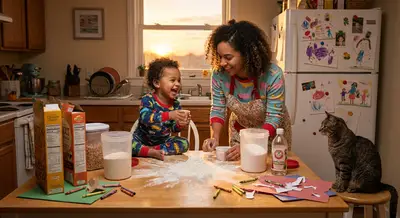
- Cooking together: Measuring ingredients is math. Watching water boil or ice melt is science. Following steps in a recipe supports reading and sequencing skills.
- Bath time: Pouring water between cups teaches volume and comparison. Naming body parts and talking about how they work sneaks in basic biology.
You don’t need to “get it right” every time. Even a few extra minutes of intentional conversation during a normal routine can make your child feel seen, heard, and capable—and that’s the foundation of real learning.
Supporting Different Learning Styles (Without a Fancy Assessment)
You might notice one child can sit and color for an hour, while another lasts 30 seconds before cartwheeling across the room. That doesn’t mean one is “good at learning” and the other isn’t; it just means they may learn in different ways.
Here are some simple ways to support different learning styles at home:
- For kids who are always moving: Turn learning into action. Practice spelling by hopping for each letter, do math while tossing a ball, or act out stories instead of just reading them.
- For kids who love talking: Use conversation as your main tool. Ask open-ended questions like “What do you think will happen next?” or “Why do you think that?” Encourage them to explain their ideas, even if their answers aren’t “right.”
- For kids who like to watch first: Let them observe. They might prefer to watch you build the puzzle or try the project before jumping in. Invite them gently—“Want to help with this part?”—instead of pushing.
- For kids who love to draw or create: Offer paper, crayons, or blocks as a way to process new things. After a trip to the zoo, ask if they want to draw their favorite animal or build its habitat with blocks.
You don’t have to label your child’s learning style or pick just one. Many kids shift between different ways of learning depending on the day, mood, and topic. The goal is to notice what lights them up—and lean into that.
Turning Questions (Even the Exhausting Ones) Into Learning
If you’ve ever heard “Why?” nine times in a row, you know how tiring curiosity can feel. But those repeated questions are actually your child practicing critical thinking, cause and effect, and language skills.
You don’t have to answer perfectly or know everything. Try these realistic responses:
Flip the question back:
“Why do you think the sky is different colors at sunset?”
This gives them space to imagine, guess, and reason things out.Admit you’re not sure—and model how to find out:
“You know what? I’m not sure why that happens. Let’s look it up after dinner,” or “Let’s see if we can find a book or a video about that.”Use “I wonder” statements:
“I wonder what would happen if we watered that plant more,” or “I wonder why ice melts faster in warm water.” This invites exploration rather than ending the conversation.Set gentle limits when you’re empty:
It’s okay to say, “I love your questions, and my brain is really tired right now. Can you save your next question and ask me after snack time?”
You’re still valuing their curiosity while protecting your own energy.
Your child is learning that questions are welcome, that adults can say “I don’t know,” and that finding answers can be a shared adventure—not a test.
Encouraging a Love of Reading Without Forcing It
You’ve probably heard “read to your child every day,” which is wonderful—and also not always realistic when you’re juggling work, siblings, dishes, and your own exhaustion. The good news: “Reading support” can look like many different things.
Here are some low-pressure, real-life ways to build literacy:
- Short and sweet counts. Two pages of a book before bedtime still matters. A quick story in the morning or while waiting for an appointment is just as valuable as a long storytime.
- Let them choose. Even if it’s the same dinosaur book for the 47th time, following their interests makes reading feel fun and safe, not like a chore.
- Use the world as a book. Read signs, cereal boxes, menus, and labels out loud. Let your child “read” logos they recognize (“Where’s the milk?” “There!”).
- Tell stories out loud. If you’re too tired to read, tell a story from your childhood, or make up a silly one together. That still builds narrative skills and imagination.
- Be a “perfectly imperfect” reading model. Let your child see you with a book, a recipe, an article on your phone—anything. You don’t have to be reading novels; the message is, “Grown-ups read, too.”
If your child isn’t drawn to books yet, avoid turning reading into a power struggle. Keep offering, keep it light, and celebrate tiny steps—like sitting with you while you read, or “reading” the pictures on their own.
Making Screen Time More Educational (Without Going All or Nothing)
Screen time is part of many families’ reality, and beating yourself up over it rarely helps. Instead of aiming for perfection, you can aim for purposeful screen time when possible.
Some simple shifts:
- Co-watch when you can. Even 10–15 minutes sitting with them can turn a show into a learning opportunity. Ask, “What do you think will happen next?” or “Why is that character upset?”
- Talk about what they see. Afterward, ask, “What was your favorite part?” or “Did anything feel confusing or scary?” You’re building comprehension and emotional literacy.
- Look for high-quality content. Educational shows, story-based programs, and apps that encourage creativity or problem solving often offer more than passive entertainment.
- Use screens as a starting point, not the whole activity. If they watch a show with animals, draw one together afterward, look up a fun fact about it, or pretend to be that animal in a game.
And if some days the tablet is simply survival mode so you can cook, shower, or breathe—that’s okay. One day, or even a tough season, won’t define your child’s entire educational journey.
Helping Kids Through School Struggles Without Shame
At some point, most kids struggle with something—reading, math, sitting still, organization, or just the social dynamics of school. When that happens, it’s easy for both kids and parents to feel discouraged.
Here are ways to support them without adding pressure:
- Separate the child from the struggle. Instead of “You’re bad at math,” try “Math is feeling really tricky right now, but tricky things are how our brains grow.”
- Focus on effort and strategies, not just results. Celebrate: “You kept trying even when it was hard,” or “I noticed you used your fingers to help solve that problem.”
- Stay curious with teachers. Ask, “What are you seeing at school?” and “What helps them there?” You and the teacher are teammates, not opponents.
- Break tasks into bite-sized pieces. Instead of “Do all your homework,” try, “Let’s do three problems, then take a snack break,” or “Let’s read two pages now and two after dinner.”
- Watch for stress signs. Stomach aches, tears about school, or sudden behavior changes can be signs your child feels overwhelmed. In those moments, they need safety and calm more than lectures about responsibility.
If you’re worried about learning or behavioral challenges, reaching out to your pediatrician or school for evaluations doesn’t mean you’ve failed; it means you’re getting your child extra support. That is good parenting.
Caring for Yourself So You Can Keep Showing Up
It’s hard to support your child’s learning when you’re running on fumes. You don’t have to be calm, patient, and creative all the time to be a good parent—but you do need some basic refills.
Consider:
- Lowering the bar on “perfect.” Messy crafts, half-finished projects, and wobbly routines still count. Your child doesn’t need an ideal environment; they need you.
- Building in small reset moments. Even 5 minutes of breathing, stretching, scrolling in silence, or drinking something warm while the kids are occupied can help.
- Letting go of comparison. Other families’ color-coded charts and elaborate activities don’t make your everyday, simple efforts less valuable.
- Remembering that safety and love are educational. A child who feels emotionally safe is more able to explore, ask questions, and make mistakes—the heart of learning.
You don’t need to turn every moment into a lesson. Just remember: in their eyes, you are the most important teacher they’ll ever have—even on the days you feel like you’re barely holding it together.
Conclusion
Education isn’t just what happens at a desk with a worksheet. It’s in the backseat conversations, the grocery store math, the bedtime stories (and stalls), the “Why?” questions, and even the mistakes and meltdowns.
You don’t have to be a teacher, a child development expert, or a Pinterest parent to raise a curious, capable learner. By noticing the learning that’s already happening, weaving in small moments of connection, and showing your child that questions are welcome and effort matters, you’re building something powerful: not just a smart kid, but a child who feels confident, supported, and deeply loved.
And that is an education no classroom can replace.
Sources
- Centers for Disease Control and Prevention – Early Brain Development and Health - Explains how early experiences and everyday interactions shape children’s brain development
- Harvard University Center on the Developing Child – Serve and Return - Describes how back-and-forth interactions between adults and children support learning and development
- American Academy of Pediatrics – Literacy Promotion: An Essential Component of Primary Care Pediatric Practice - Outlines the importance of reading and language exposure in early childhood
- American Academy of Pediatrics – Media and Young Minds - Provides research-based guidance on screen use and its impact on children’s learning
- U.S. Department of Education – Helping Your Child Become a Reader - Offers practical tips for families to support early literacy at home